
Visiting Museum
Education
Explore
Social
Working hours
Every day except Monday
10:00 - 18:00
Monday Closed


ABOUT MUSEUM
Preserving the memory of Šeduva’s Jews and Lithuania’s lost shtetls
Scroll
The content of the museum’s exhibitions was developed by a team of local Lithuanian curators in collaboration with leading experts from Germany, Israel, Lithuania, Poland, and the United States.
The exhibition is based on academic research as well as authentic testimonies and memories of the Jews of Šeduva and their descendants around the world.
The museum tells the story of everyday life in the Šeduva shtetl through the experiences of ordinary people who once lived there. Visitors encounter their voices through texts, photographs, artefacts, and multimedia installations.
The Lost Shtetl Museum aims to create a broader narrative — one in which Lithuanian Jews are remembered as an integral part of the Jewish world, contributing to the cultural, economic, and political life of Lithuania. The creators of the Lost Shtetl are guided by the museum’s mission to ensure that history isn’t forgotten and that the voices of the shtetls continue to resonate.


The Šeduva Jewish History Museum "The Lost Shtetl" invites visitors to discover a vanished world — an entire lost civilisation of shtetls.

Drawing on the voices of the Šeduva Jewish community, the museum tells the story of thousands of shtetls and the hundreds of thousands of Jews who lived in them, whose daily lives, traditions, and aspirations helped shape the cultural identity of Lithuania and the wider Eastern European region.
The museum is not only a witness to the past — it seeks to honour, preserve, and, where possible, revive memory. Through photographs, town maps, written records, and video testimonies in which descendants of Šeduva’s Jews share stories of their families’ lives, the museum’s exhibitions recreate the world of the shtetl, a world that no longer exists.
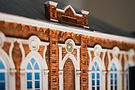

The groundbreaking ceremony for the Lost Shtetl Museum took place in May 2018. The Lost Shtetl Museum was initiated and established by the YouthAid Foundation, a Switzerland‑based philanthropic organization. The YouthAid Foundation has constructed, funded and overseen the museum’s development from the very beginning through a separate legal entity established in Lithuania – the non-profit organisation named “The Lost Shtetl – Museum of Šeduva Jewish History”.
The museum was created by an international team of architects and designers. The building was designed by Rainer Mahlamäki and his Finnish architectural firm Lahdelma & Mahlamäki Architects (www.lma.fi), recipients of numerous international awards.
According to architect Rainer Mahlamäki, “the museum building is a conceptual interpretation of the lost shtetl,” intended to preserve the memory of a destroyed community. Mahlamäki drew inspiration directly from the shtetls themselves: the museum is a single large structure whose exterior reflects the forms of traditional shtetl houses, recreating the rooftops of a once-thriving Jewish community. From the outside, it resembles an entire townscape, with the silhouette of a synagogue roof as its centrepiece.
The museum is also designed to blend harmoniously into the surrounding landscape and meets the needs of the public, including people with disabilities.
The permanent exhibition design was developed by the international design firm Ralph Appelbaum Associates (RAA) (www.raai.com).
RAA is the world’s largest organisation dedicated to the planning and design of museums and narrative environments. Its collaborators include such prominent institutions as the United States Holocaust Memorial Museum, the Smithsonian National Museum of African American History and Culture, the British Museum, and the Imperial War Museum in London.


Since opening, the Lost Shtetl Museum has received national and international recognition for its architecture, exhibition design, and contribution to cultural tourism.
Lithuania's Tourism Project of the Year (2025)
The Lost Shtetl Museum was named Tourism Project of the Year at Lithuania's Tourism Success Awards 2025, organized by Travel Lithuania. Chosen through public voting, the award recognized the museum as one of the country's most significant new cultural tourism destinations, celebrating its unique visitor experience and its contribution to promoting Lithuania's cultural heritage.
iF Design Award (2026)
The Lost Shtetl Museum received the prestigious iF Design Award, one of the world's leading design competitions, in the Interior Architecture category for exhibitions and cultural installations. The international jury recognized the museum's immersive exhibition design, created by Ralph Appelbaum Associates (RAA), for its ability to tell the story of the vanished Lithuanian shtetls through meaningful and engaging spatial design.
Prix Versailles – Among the World's Most Beautiful Museums (2026)
In 2026, the Lost Shtetl Museum was selected as one of the World's Most Beautiful Museums by the prestigious Prix Versailles awards, announced at UNESCO headquarters in Paris. The museum became the first museum in the Baltic States to receive this distinction. The jury praised its architecture, designed by Rainer Mahlamäki, and its powerful integration of architecture, landscape, and storytelling to preserve the memory of Lithuania's vanished Jewish communities.
“Žalioji erdvė” Award (2026)
In 2026, the Lost Shtetl Museum’s Memorial Park, designed by Enea Landscape Architecture with the landscape development process in Lithuania led by Grūta, received the main award in the Žalioji erdvė (“Best Green Space”) competition organized by the Lithuanian news portal Lrytas. The award recognized the Memorial Park’s landscape design, its sensitive relationship with the museum’s story, and its creation of a meaningful and welcoming space for visitors.


